A unique environment of rare beauty and mesmerizing charm.
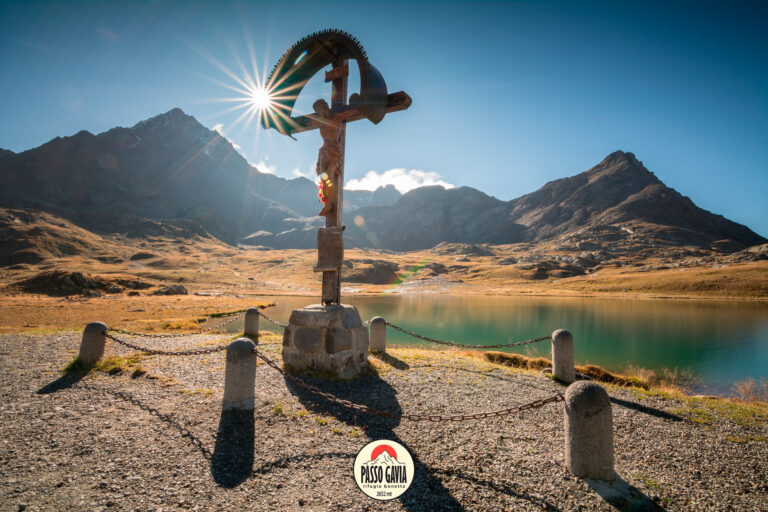
At the foot of Mt. Gavia (3223mslm) and Corno dei Tre Signori (3361mslm) set in a wide saddle of meadows and moraines rises one of the highest passable passes in the Alps. The Gavia Pass, 2652mslm, surrounded by unbelievably beautiful alpine lakes and wild meadows populated by every species of fauna, connects Santa Caterina Valfurva with Ponte di Legno as well as serving as the administrative border between the provinces of Brescia and Sondrio.
The pass is included in the Southern Rhaetian Alps, more specifically in the Sobretta and Gavia subgroup, and is one of the most beautiful and daring Alpine passes on the continent.
Known since medieval times, the Gavia Pass was used only by daring and courageous merchants or smugglers because of the difficulties in crossing it and the difficult conditions that raged throughout the year in the area: avalanches, fog, landslides, storms and cold made the route arduous and complex to such an extent that the pass in a few decades earned the name “Passo di Testa di Morto,” an appellation that we even find on 19th- and 20th-century cartography.
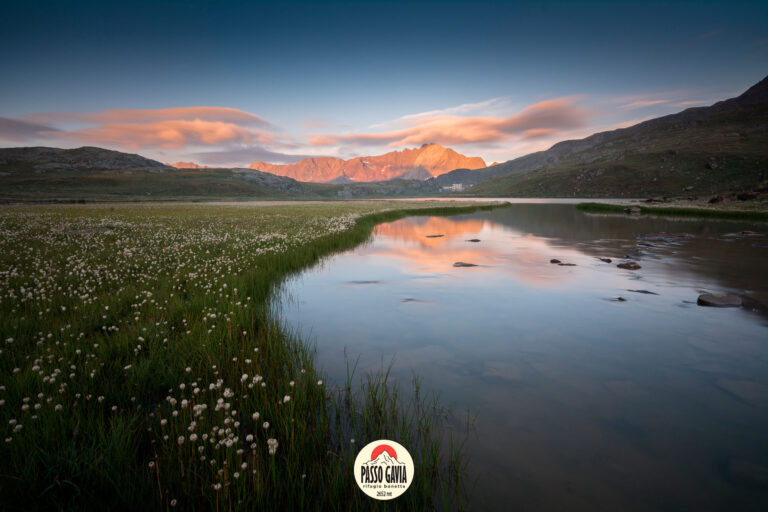
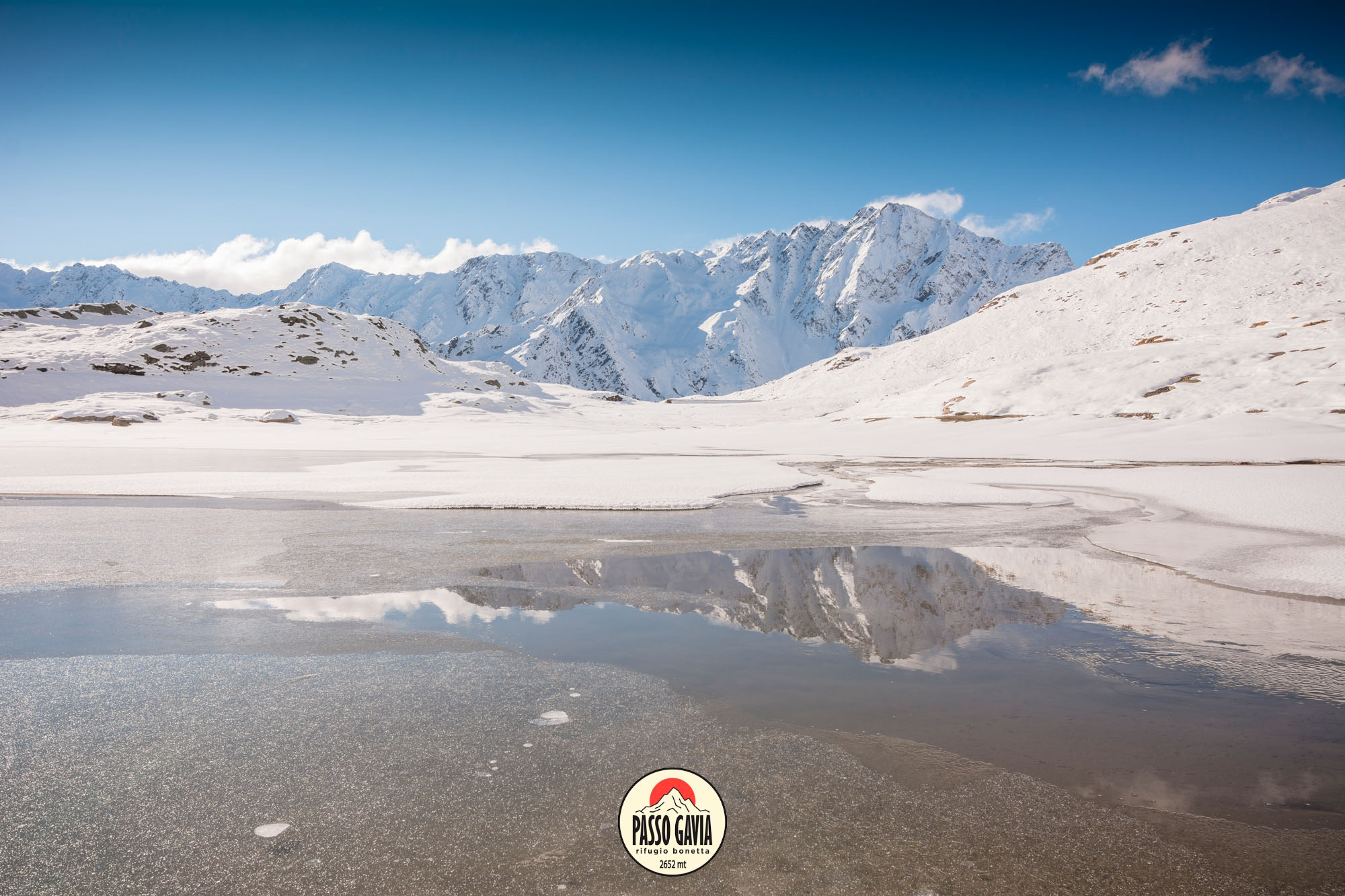
Near Gavia Pass lies one of the largest and most valuable alpine lakes in the entire range. Lake Bianco is truly a jewel of rare beauty; its crystal-clear waters reflect the imposing peaks of Ortles (3905mslm), Gran Zebrù (3867mslm) and Tresero (3602mslm) to the north, to the west Monte Gavia (3223mslm) and Punta Pietrarossa (3283mslm) while to the east Corno dei Tre Signori (3360mslm) and Cima Gaviola (3050mslm). Suggestive photographic vistas and under the banner of silence and relaxation await visitors every day who are able to grasp the beauty and charm of their surroundings.
About 3 km before the pass, Brescian side, we find instead a second body of water called Black Lake. A legend passed down for generations tells us the beautiful as well as sad story of two lovers set here:
[…] The two lovers were climbing the Gavia Pass; they paused for a moment, just below the pass, and saw that the pursuers were catching up with them. “You go ahead, I’ll stay for a moment and try to stop them,” the young man said to Belviso. They looked at each other: she knew it was not the truth, but there was nothing else left to do: if they were caught up together, it would be the end for their dream of love. She left him, with death in her eyes. He had already reached the pass when the devil was about to get his clutches on the young man. It happened, then, what they had agreed without even speaking to each other: aided by some arcane power, they changed, both of them, into lakes: he into the Black Lake, she into the White Lake. No one could have any power over them anymore. Since then their spirits have lived in the waters and the two lakes, on quiet, clear nights, talk to each other, yearning for the life that had been denied them. A whisper, barely, that few can catch.
About 300 meters away from the Pass there exists, unique in Italy, a patch of Arctic tundra, a relict of the last glaciation, covering an area of about four hundred square meters. On polygonal soils it accommodates species such as: Polytrichum sexangularis, Salix herbacea, Carex curvula, Loiseleuria procumbens or Ranunculus glacialis.
It is therefore an area of high nature value as well as equally high vulnerability.
Respect and protection of this land are fundamental imperatives and to be taken into consideration whenever one sets foot on this unique and inimitable place.
The medieval path across the pass was subjected to considerable widening and renovation during World War I, during which, given the proximity of the front line, the road became of crucial strategic importance. In any case, the route remained unpaved, narrow and of considerable danger. Significant improvements have been made since the second half of the 1900s, including the construction of a tunnel to avoid the most dangerous section and the complete paving of the track.
On the morning of July 20, 1954, a Fiat 639 military vehicle, carrying twenty-one Alpine soldiers aged 21 to 23, fell into an embankment as a result of roadbed subsidence on the Brescian side; the crash that followed the approximately 150-meter flight caused seventeen deaths. Of the two most seriously wounded, one died the next day from his wounds, for a total of eighteen casualties.
At the time, the track, which lacked guardrails and protections, was considered very risky and its travel was not recommended for trucks; there was also a ban on vehicles with more than 14 passengers, which was not observed. At the site of the accident, the total width of the roadway was 2.30m. The mangled bodies of the Alpine soldiers, belonging to the 6th Regiment, Bolzano Battalion, were transferred to the small church in Ponte di Legno for funeral services. Two memorial plaques were placed to commemorate the tragedy, which still exist today.
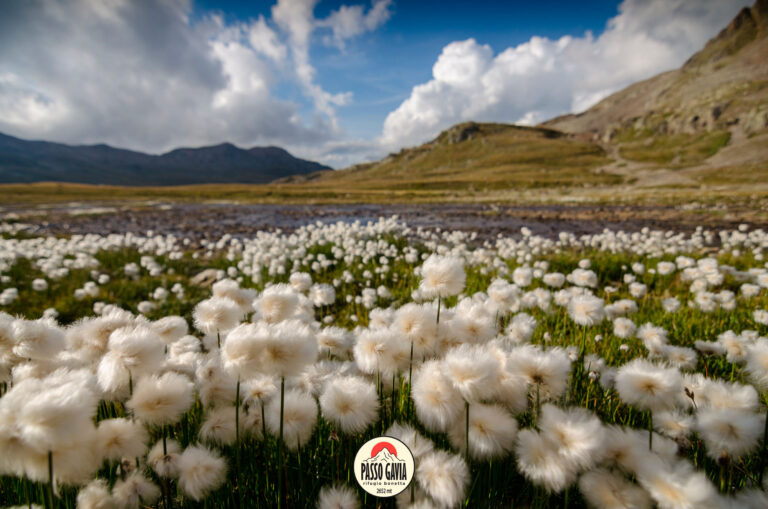
The exceptional summer blooms of eriophores, the numerous floral varieties, the peats full of life and the peaks and meadows populated by ibexes, chamois, stoats and a host of other wildlife species make Gavia Pass a place of easy access and countless opportunities for lovers of pristine Nature in its wild state.