
“Thus the same environment that for causes of war saw the sacrifices and deaths of so many young soldiers, becomes for new generations of young people, in an era of lasting peace, the cradle of great joys, the gymnasium of great feats, the school of great experiences.” Don Eugenio Bussa.
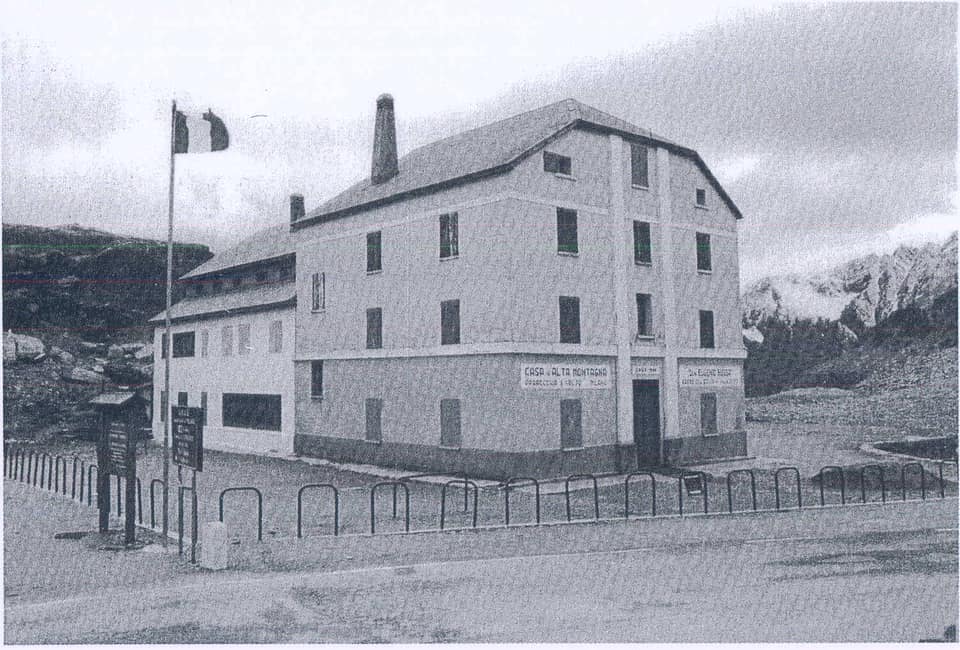
The first structure built on the Gavia, ran in the 1920s, “the Passo di Gavia Alpine Hotel,” erected by 7 brothers from Pezzo, a small town above Ponte di Legno, who tried to make the pass, with the newly built military road, a tourist destination. With the outbreak of World War II various problems prompted the brothers to sell the building.
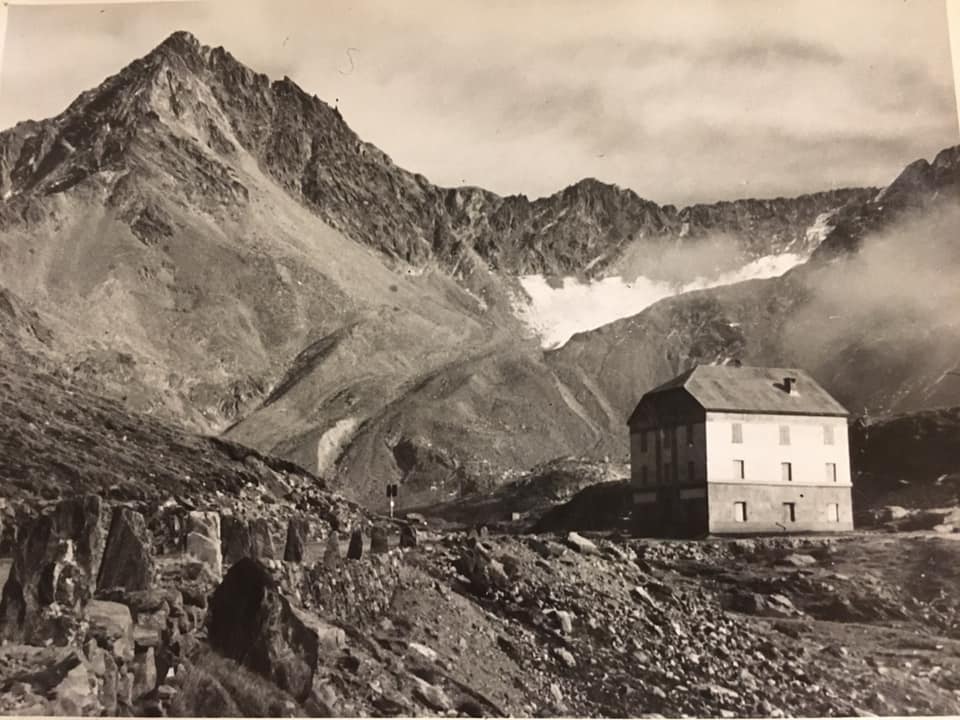
It was actually a parish in Milan, with Fr. Eugenio, who had so much wanted to buy it for his boys, thanks to a benefactor, who took it over in February 1948; in July, renovation work began and an initial expansion with the addition of a floor. Note that at that time there were no cranes at these elevations; materials were pushed with wheelbarrows up sloping wooden planks. Thus, in 1949 the “High Mountain House” at Gavia Pass was inaugurated, Don Eugenio’s great dream come true, a structure at 2621 meters above sea level where his boys could spend their summers.
The Gavia road at the time required steady nerves and suitable means, it was Don Eugenio himself who used to take the boys up the pass in his jeep back in the early 1950s, when the road was still not being cleaned, in early July sometimes it was still not possible to get up the pass from Santa Caterina in some years, he had to leave the jeep just below Lake Bianco. Having a four-wheel-drive vehicle in those years was rare, it had to maneuver on the hairpin bends going up from St. Catherine, the road was very narrow, only after 1961, when the state decided to take it over and turn it from a military road into a state road, did some work begin to modernize it.
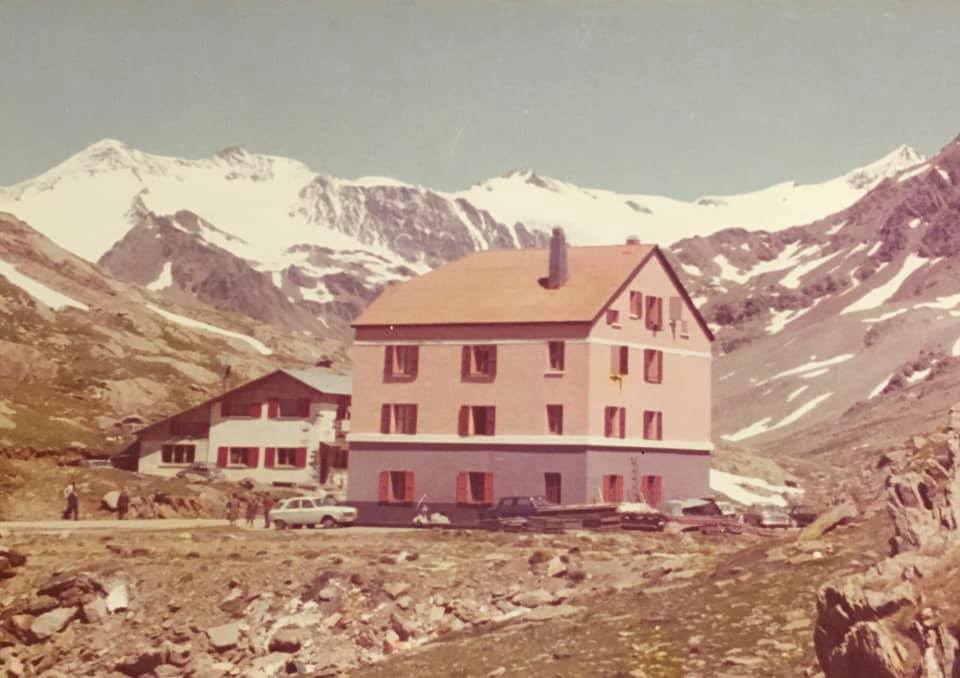
On the Santa Caterina side it was paved in 1987, on the Ponte di Legno side in the early 1990s. Over the years he always wanted to bring new things to the house, until he made a new part in the early 1970s, in 1973 it was finally completed and still remains as such, as the third photo shows us. Because of its grandeur it was called “the Vatican,” even today we “connoisseurs” call it the Vatican of the Gavia.
There are stories and testimonies of the boys who spent their summers here very beautiful, certainly the experiences they had on the Gavia will remain in their memory for a long time. “The vacation spent on the Gavia was different from the others, because it changed me in part: it made me understand the beauty of community life and made me appreciate the importance of certain human values rediscovered up there, among the peaks projected harmoniously toward paradise.”
Today the house is no longer owned by the Milan parish; it was purchased a few years ago by the family Bonetta, former owners of the hut next door opened in 1960, they nevertheless continue to rent it to oratories and groups who want to spend a few days at high altitude, just as they used to do in the old days.
The first photo on the cover is from 1948.
M.Trezzi